




Key takeaways
- A mobile signal repeater (signal booster) can only serve a desert camp where a usable operator signal is available on site, typically at mast height.
- Steel-clad cabins introduce high building entry loss. Coverage is achieved by distributing the amplified signal to indoor antennas within each cabin.
- In Saudi Arabia, stc, Mobily and Zain operate 4G and 5G across multiple low- and mid-band allocations. The bands available at a given site must be confirmed by survey.
- Repeaters supplied and used in Saudi Arabia must comply with the CST specification for mobile repeaters.
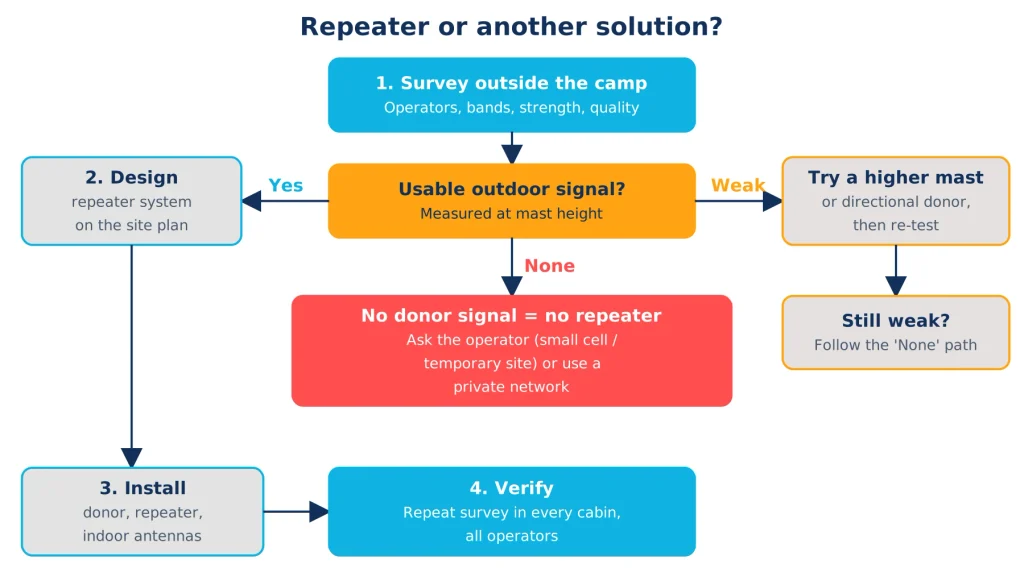
- A robust project follows five stages: outdoor survey, donor selection, system design, installation and post-installation verification.
Remote accommodation camps are a standard feature of construction, oil and gas, mining, infrastructure and defence-support projects across the Middle East. These sites are frequently located far from the nearest cell site, and the steel-clad modular buildings used for accommodation and offices significantly attenuate the signal that does reach them. The result is a familiar pattern: usable coverage at the perimeter, and little or none inside the cabins.
Stella Doradus is an Irish company that designs mobile signal repeater systems and the Shark professional signal analyser. We are regularly asked to provide coverage solutions for desert camps and workforce accommodation. This article sets out the engineering principles involved.
How do you provide mobile coverage in a remote desert camp?
Coverage is provided by capturing the strongest available operator signal with a donor antenna mounted on a mast, amplifying it with a repeater and distributing it through a cabled network to indoor antennas in each cabin. This approach is viable only where at least one operator provides a usable signal at the site. Where no donor signal is available, a repeater cannot provide a solution, and an operator-led or private network option is required.
A typical project follows five stages:
- Outdoor survey. Identify the operators and frequency bands present at the site, and measure signal strength and quality at the proposed donor antenna height.
- Donor selection. Determine the serving cell to be used as the donor and the optimum mast position and antenna orientation.
- System design. Position the repeater, splitters, cabling and indoor antennas on the site plan, typically with one antenna per cabin or per corridor in larger blocks.
- Installation. Install the donor antenna and mast, house the repeater in a temperature-controlled plant room and route the distribution cabling to each cabin.
- Verification. Survey every cabin for every operator in scope and retain the report as the performance baseline.
What mobile frequencies are used in Saudi Arabia?
Saudi Arabia has three mobile network operators: stc, Mobily and Zain. Collectively, they operate 4G and 5G in low bands (700, 800 and 900 MHz), mid bands (1800, 2100, 2300, 2500 and 2600 MHz) and 5G in the 3.5 to 3.7 GHz range. The band allocation varies by operator and by location.
| Operator | 4G bands reported | 5G bands reported |
|---|---|---|
| stc | B1 (2100), B3 (1800), B40 (2300 TDD) | n1, n3, n8 (900), n28 (700), n40, n77 (3700), n78 (3500) |
| Mobily | B3 (1800), B20 (800), B38 (2600 TDD), B41 (2500 TDD) | n1, n3, n8, n20, n78 |
| Zain | B1, B3, B8 (900), B20, B38 | n1, n3, n20, n41, n78 |
Implications for camp design:
- Propagation characteristics. Low-band carriers propagate further than mid-band carriers. At remote sites, the only usable donor signal is frequently a single low-band carrier from one operator.
- Equipment band support. The repeater must support the specific bands received at the donor location; otherwise it will not improve service.
- Device compatibility. Personnel from overseas may use handsets that do not support all local bands. Device compatibility should be considered at the design stage.
- Measured data. Published band lists change over time. An on-site spectrum scan provides the definitive picture of the signals available.
The same methodology applies to camps in the UAE, Qatar, Kuwait, Oman, Bahrain, Iraq and Jordan; only the operators, band plans and regulatory framework differ.
Are mobile signal boosters legal in Saudi Arabia?
Yes, provided the equipment complies with the regulator’s specification and is supplied and used in accordance with its rules. The Communications, Space and Technology Commission (CST) publishes a Specification for Mobile Repeaters (Mobile Signal Boosters) (decision 545/1445, 2024).
Non-compliant boosters can cause interference to operator networks. In 2021 the regulator, then known as CITC, announced fines of up to SR25 million for dealing in unlicensed telecommunications devices, including illegal network boosters (Gulf News). Only compliant equipment should be specified, the operator should be involved where required, and installations on military or secure sites must also follow the site’s own communications policies.
How do you boost mobile signal into steel cabins?
Steel cabins are covered by distributing the amplified signal to indoor antennas installed within each cabin, rather than attempting to overcome the building entry loss from outside. A continuous steel skin behaves as a partial Faraday cage and allows very little external RF energy to penetrate.
This is consistent with published propagation research. ITU-R Recommendation P.2109 classifies buildings with metal foil-backed cladding and metallised glazing as “thermally efficient”, a category associated with higher building entry loss than traditional construction (ITU-R P.2109). A 2024 NTIA measurement study concluded that wall material and density are stronger predictors of entry loss than building category alone (NTIA, 2024). Insulated steel sandwich-panel cabins sit at the challenging end of this range.
Design and installation considerations for steel cabins:
- Antenna density. One indoor antenna per cabin is typical for small units. Larger accommodation blocks may require one antenna per corridor or room cluster, as determined by the design.
- Cable entry. Route cables through existing penetrations or appropriately rated glands, and seal all entry points against dust ingress and heat.
- Antenna isolation. The cabin structure also shields the indoor antennas from the donor antenna, improving isolation and reducing the risk of oscillation.
- Thermal management. Locate the repeater in an air-conditioned plant room or a suitably rated enclosure, away from direct sunlight.
- Outdoor cabling. Specify UV-resistant cable and weatherproof connectors for all external runs.
What does a typical desert camp repeater installation look like?
A typical installation comprises a donor antenna on a mast, a repeater in a plant room and a cabled distribution network feeding an indoor antenna in each cabin. Small camps use a single splitter; large camps use a main cable run with splitters feeding each row of cabins.
Small camp: single repeater serving a small number of cabins
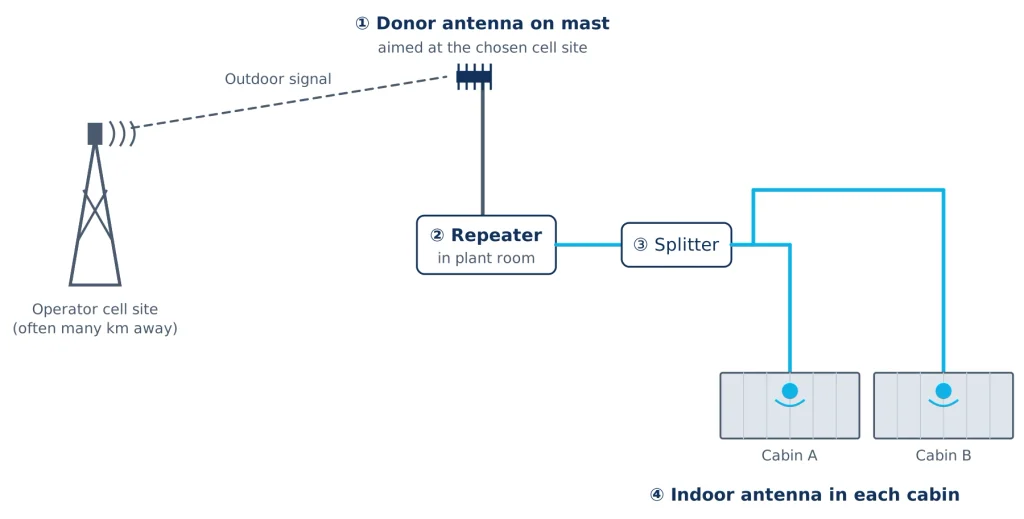
This layout is suited to site offices and small camps. A single donor antenna feeds one repeater, and a passive splitter distributes the signal to an indoor antenna in each cabin.
Large workforce camp: distributed system across rows of cabins
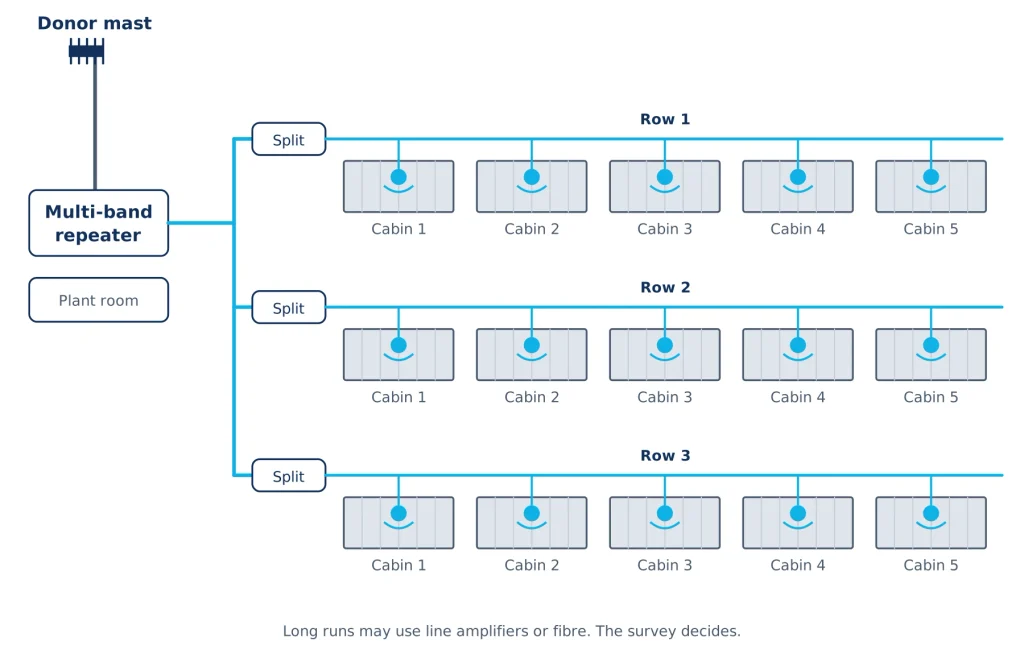
In larger camps, the repeater output is distributed through a series of splitters, with one splitter feeding each row of cabins. Over extended distances, cumulative cable loss becomes a key design constraint, and line amplifiers or fibre distribution may be specified. The appropriate architecture is determined by the survey data and the site layout.
What equipment does a camp repeater system require?
A camp repeater system requires five main elements: a donor antenna and mast, a repeater, distribution cabling with splitters or line amplifiers, indoor antennas and a survey analyser to validate the design.
| Component | Function | Desert considerations |
|---|---|---|
| Donor antenna and mast | Receives the operator signal | Mounting height and orientation are critical. Mast must be rated for local wind loading. |
| Repeater | Amplifies the selected bands | Requires temperature control and protection from dust. |
| Cabling, splitters, line amplifiers | Distribute the signal across the camp | UV-resistant cable and sealed connectors. |
| Indoor antennas | Provide coverage inside each cabin | One per cabin or per corridor, as designed. |
| Survey analyser | Validates the design before and after installation | Outdoor survey first, then a full indoor survey. |
Which Stella Doradus repeater is suited to a desert camp?
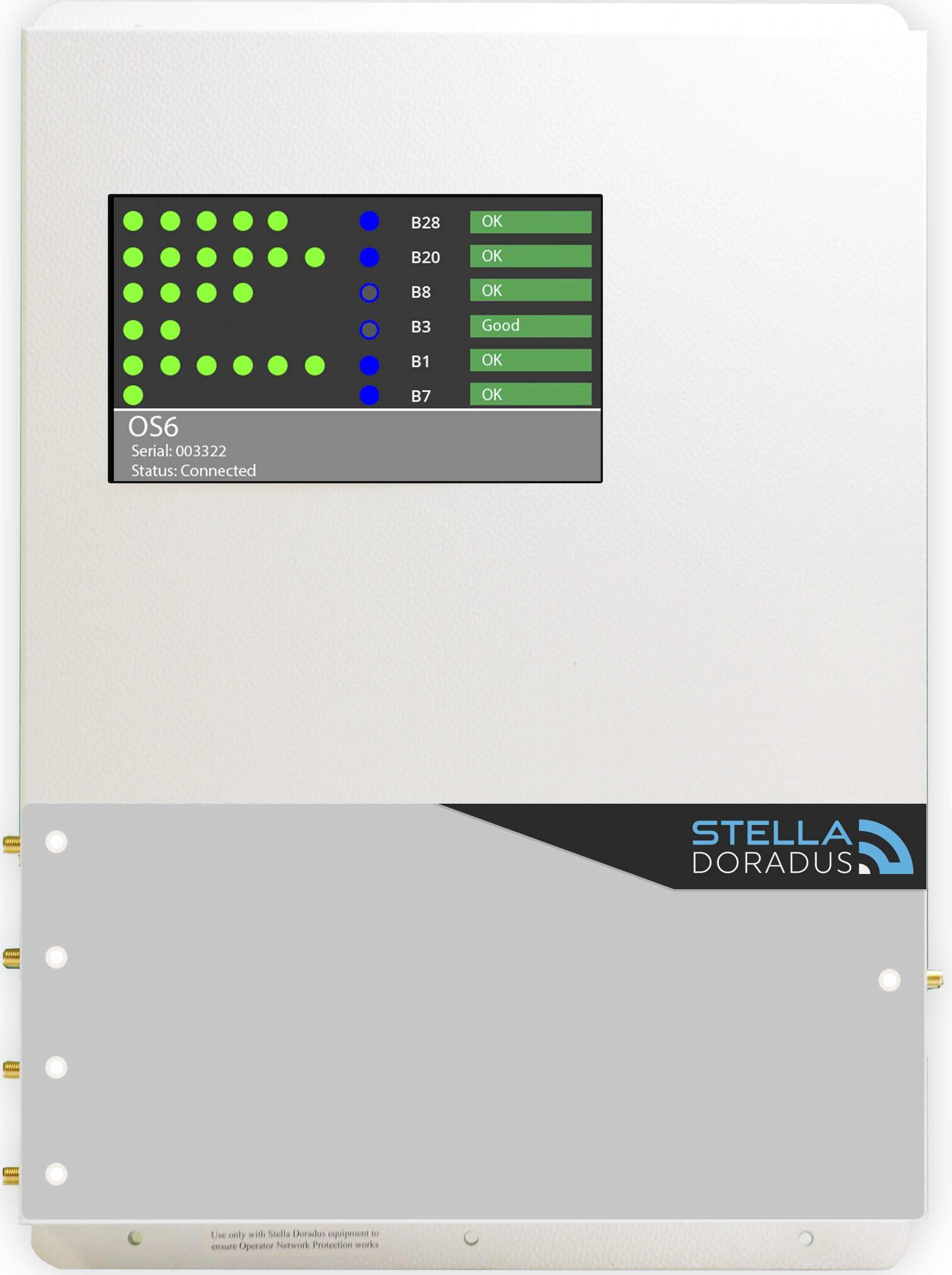
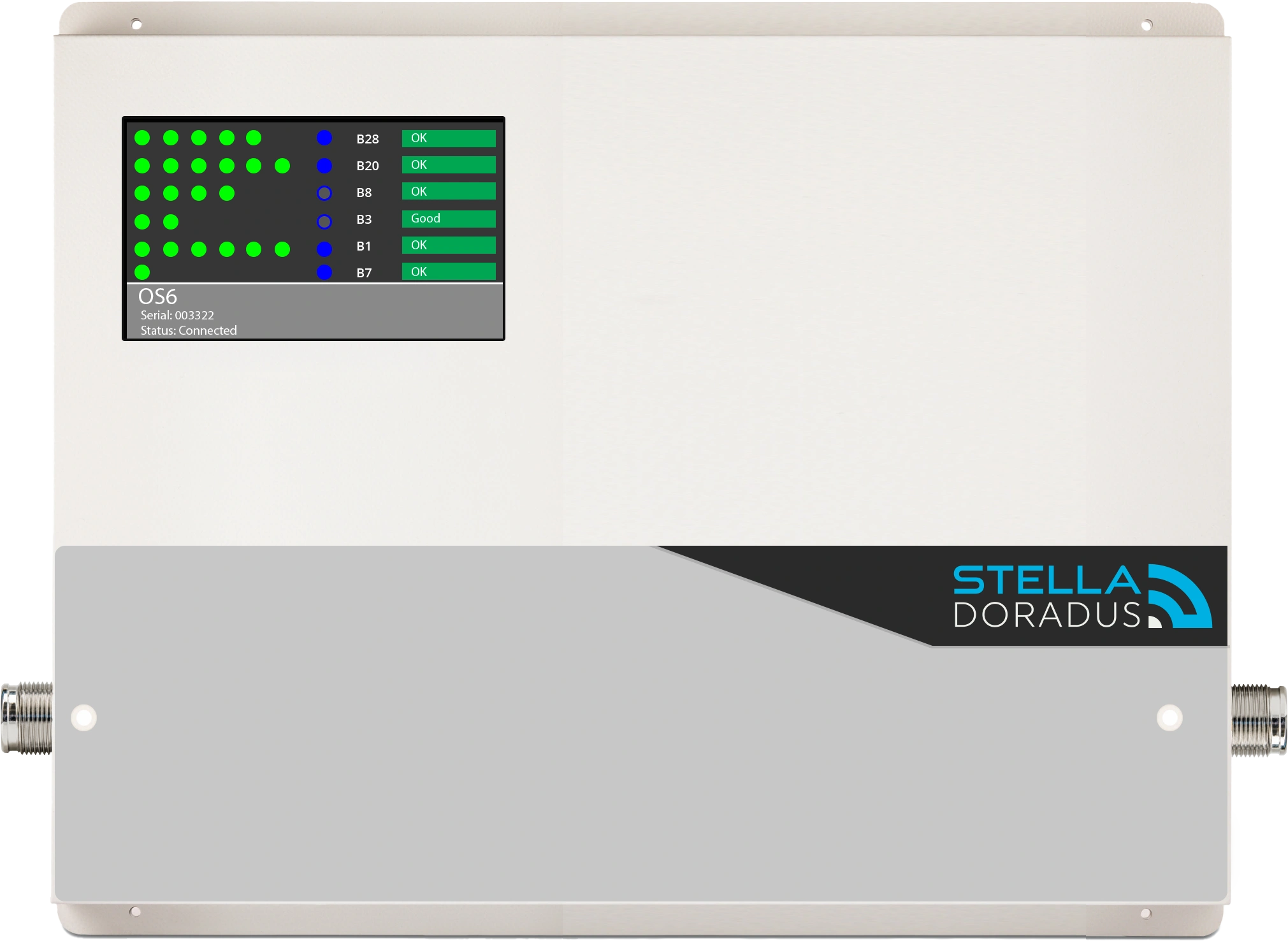
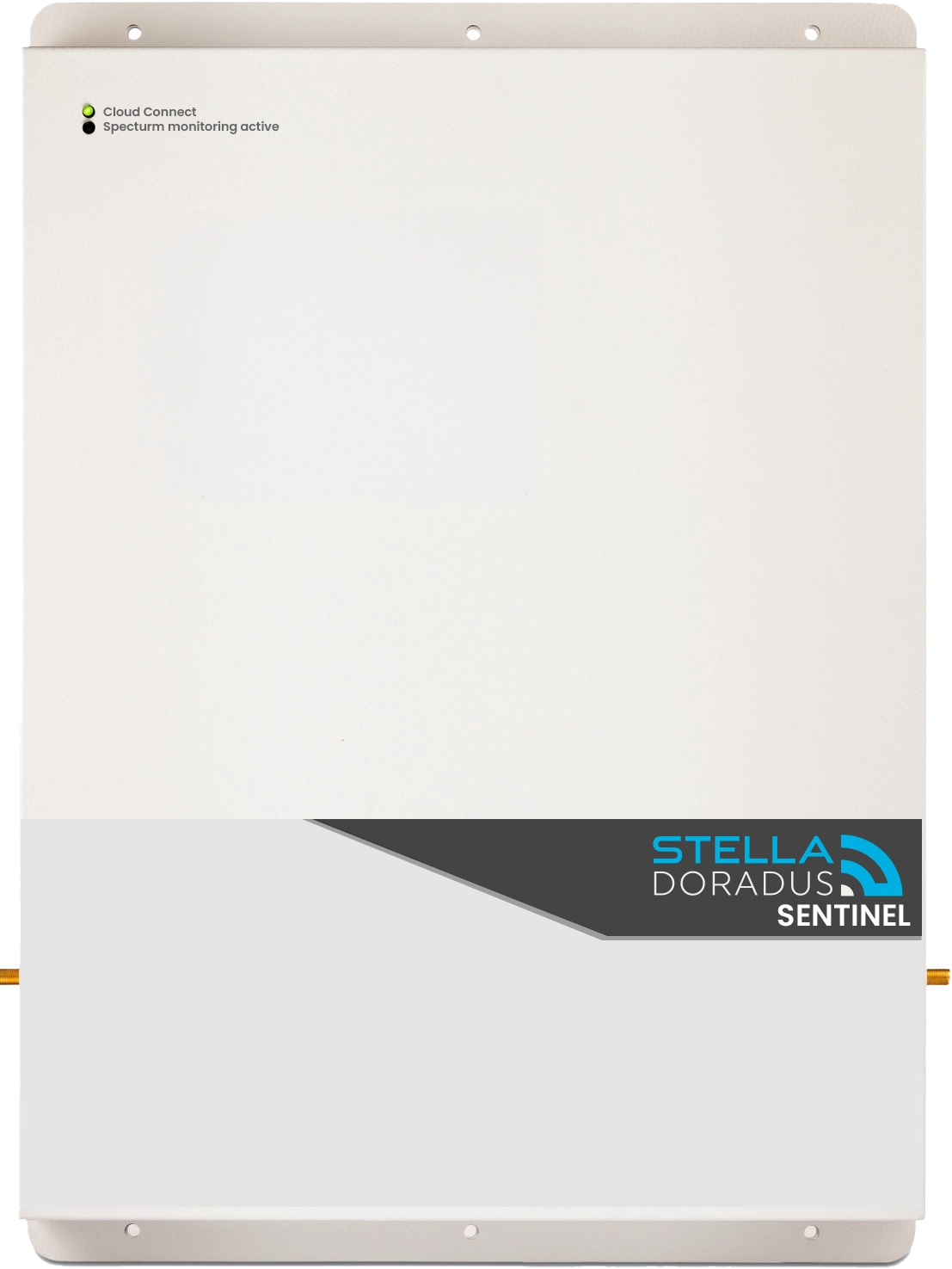
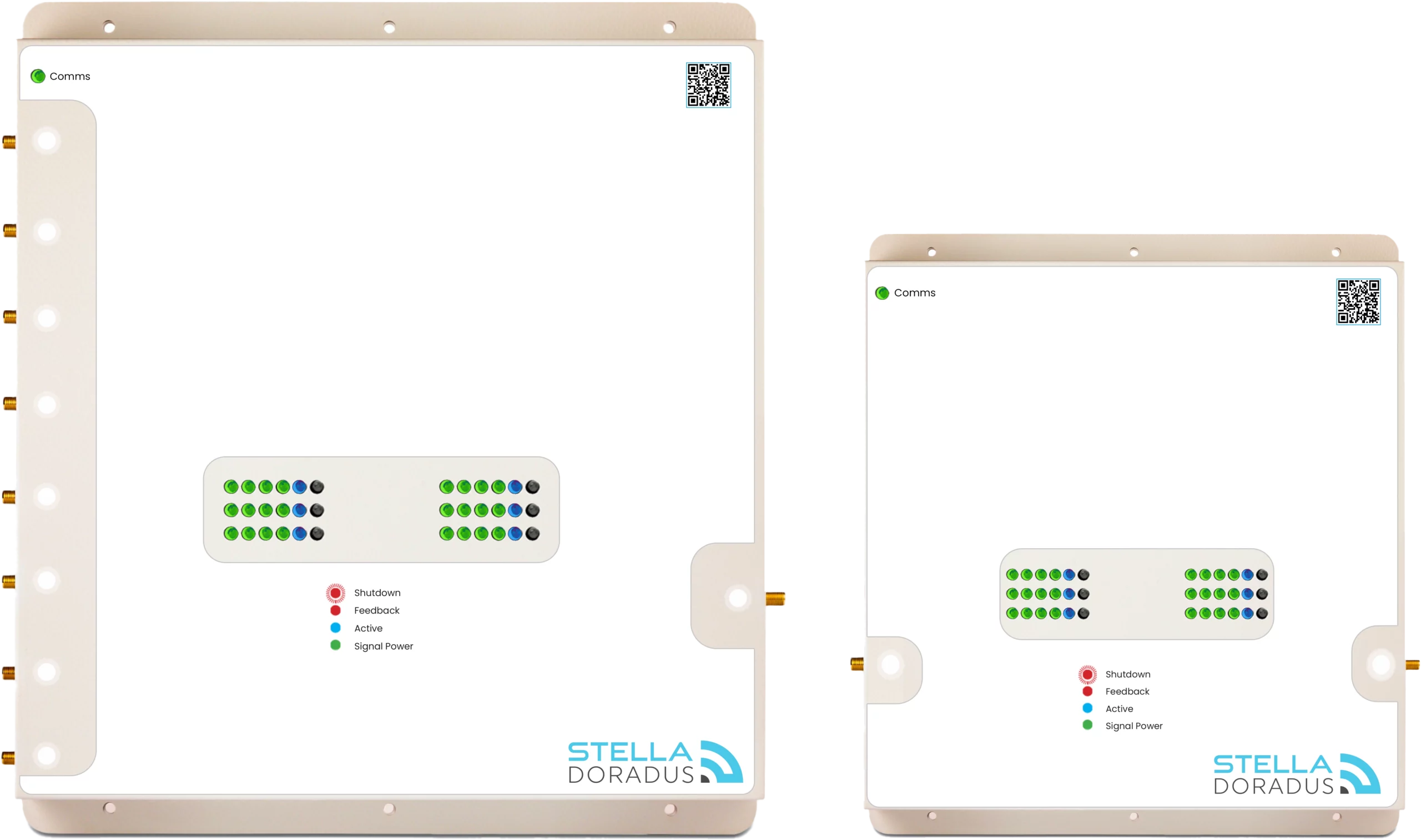
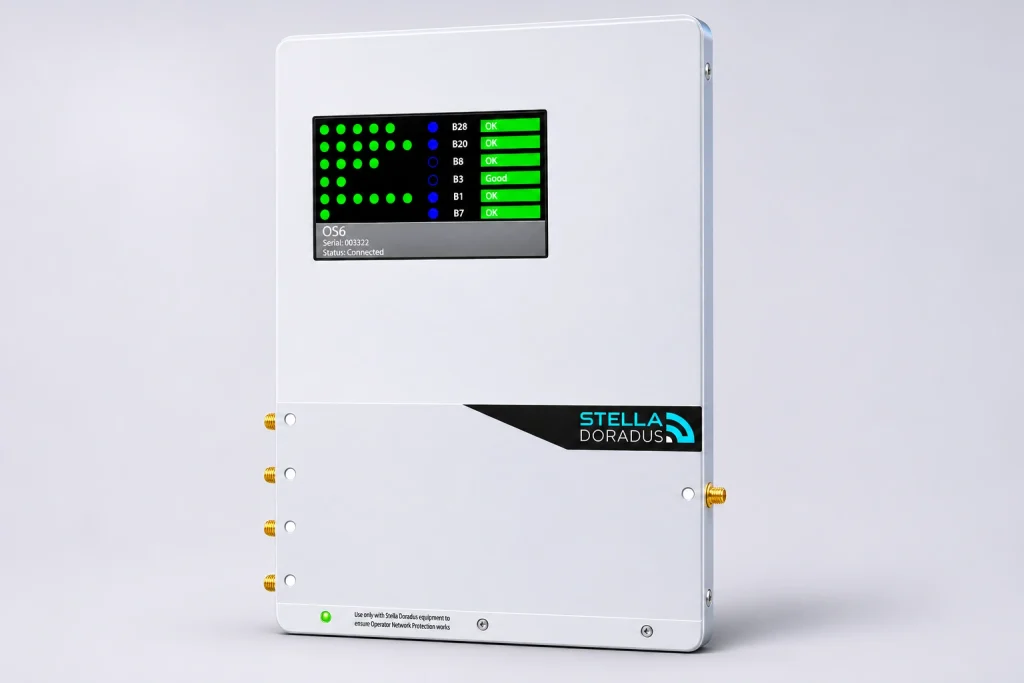
The Stella Doradus Titan iR6 is a six-band, four-port mobile signal repeater covering 700, 800, 900, 1800, 2100 and 2600 MHz, which makes it suited to multi-operator coverage in camps and remote facilities.
Its band set includes the low bands (700, 800 and 900 MHz) that most often provide the only usable donor signal at remote sites.
How is a 20-cabin desert camp covered in practice?
In practice, the outdoor survey identifies the single best donor cell, and the system is designed around that cell, with one indoor antenna per cabin and a repeat survey after installation.
A contractor establishes a camp of 20 steel cabins arranged in four rows, located some distance from the nearest town. Handsets register service at the camp perimeter but not inside the cabins.
- The engineer uploads the camp plan and carries out an outdoor survey. One operator provides a usable low-band 4G signal at mast height from a single direction; the remaining operators are weak.
- The design specifies a directional donor antenna on a mast oriented towards that cell, a repeater supporting the relevant band in the air-conditioned plant room, splitters serving each row and one indoor antenna per cabin.
- Following installation, the engineer surveys every cabin and retains the report as the performance baseline for future maintenance.
Should a second operator be required at a later stage, the original survey data indicates whether this is technically feasible before any further investment is made.
How does the Shark support surveys on remote sites?
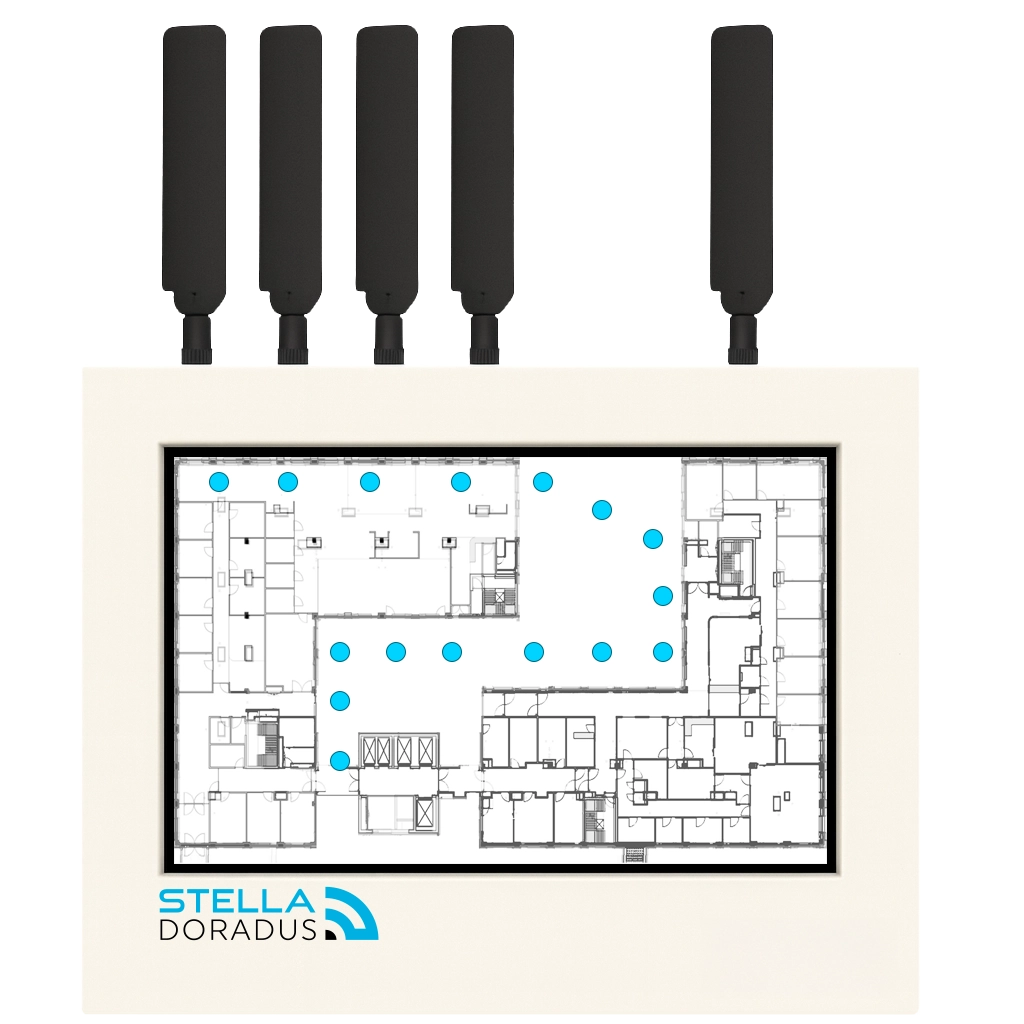
The Stella Doradus Shark is a professional signal analyser for 4G, 5G and Wi-Fi surveys that measures all operators in a single scan without a laptop, which makes it suited to the outdoor donor survey and the indoor verification on remote sites. The following capabilities are particularly relevant to remote-site work:
- Rapid scanning: a full scan in approximately 30 seconds, with all operators pre-loaded and four internal 5G modems.
- Standalone operation: a 10″ touch screen means no laptop is required.
- Four operating modes: Spectrum Analyser, Survey, Operator Locator and Walk, covering both the outdoor donor survey and the indoor verification.
- Key network parameters: RSRP, RSRQ, PCI and Cell ID are recorded for every scan.
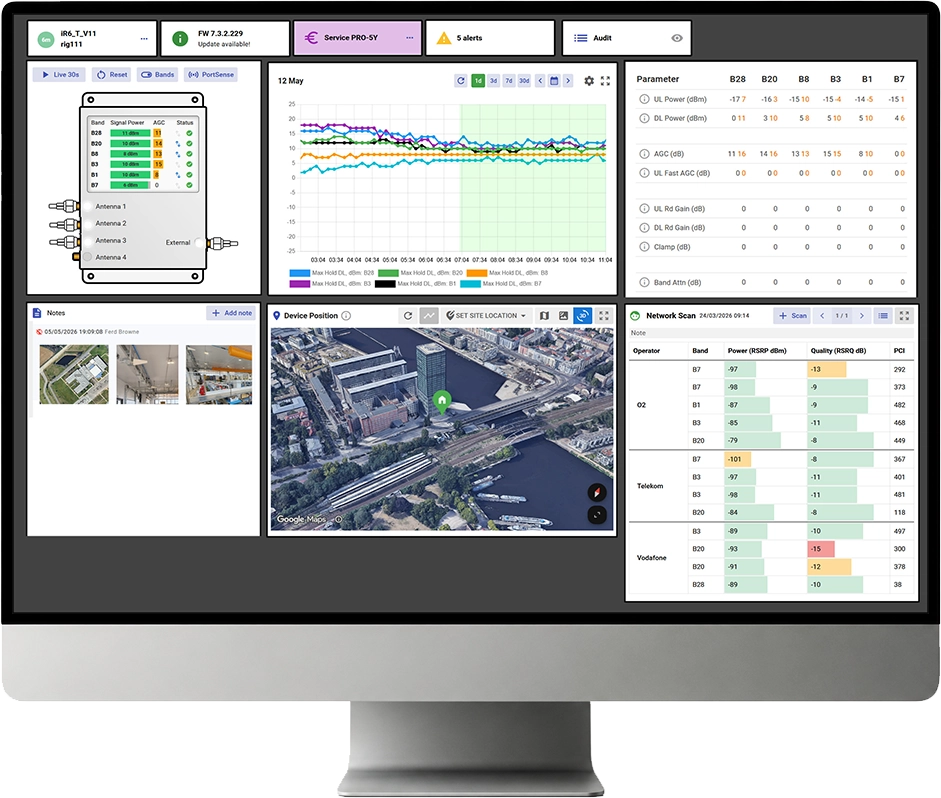
- StellaControl: surveys, photos, plans and reports synchronise automatically to the cloud platform.
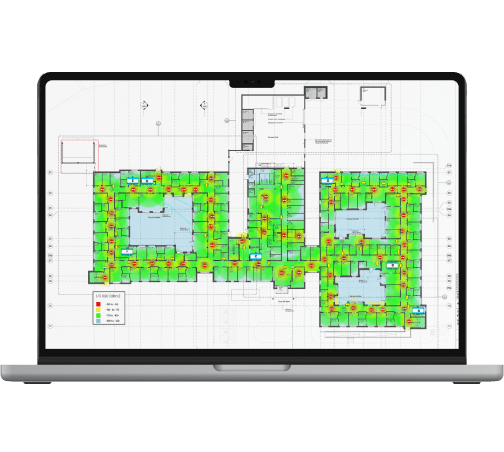
- StellaPlanner: repeaters, antennas and cabling are placed on the plan, with automatic heatmaps, equipment lists and one-click report generation.
Planning coverage for a desert camp? To discuss a project, send the camp plan, location, number of cabins and required operators to [email protected].