






Why Your Choice of Cable Determines the Performance of Your 4G and 5G Installation
When planning an in-building mobile coverage system, installers often focus on the repeater, antennas, or donor signal.
However, one of the most important design decisions is frequently overlooked: how will the RF signal be distributed throughout the building?
Increasingly, some DAS manufacturers promote CAT6 cabling as a replacement for traditional coaxial cable. At first glance this appears attractive because Ethernet cable is inexpensive, familiar to many installers and often already present in commercial buildings.
But does that make it the best choice for carrying cellular RF signals?
For most repeater installations, the answer is no.
RF and Ethernet Are Fundamentally Different
CAT6 is designed to transport digital Ethernet packets. Coaxial cable is designed to transport radio frequency energy.
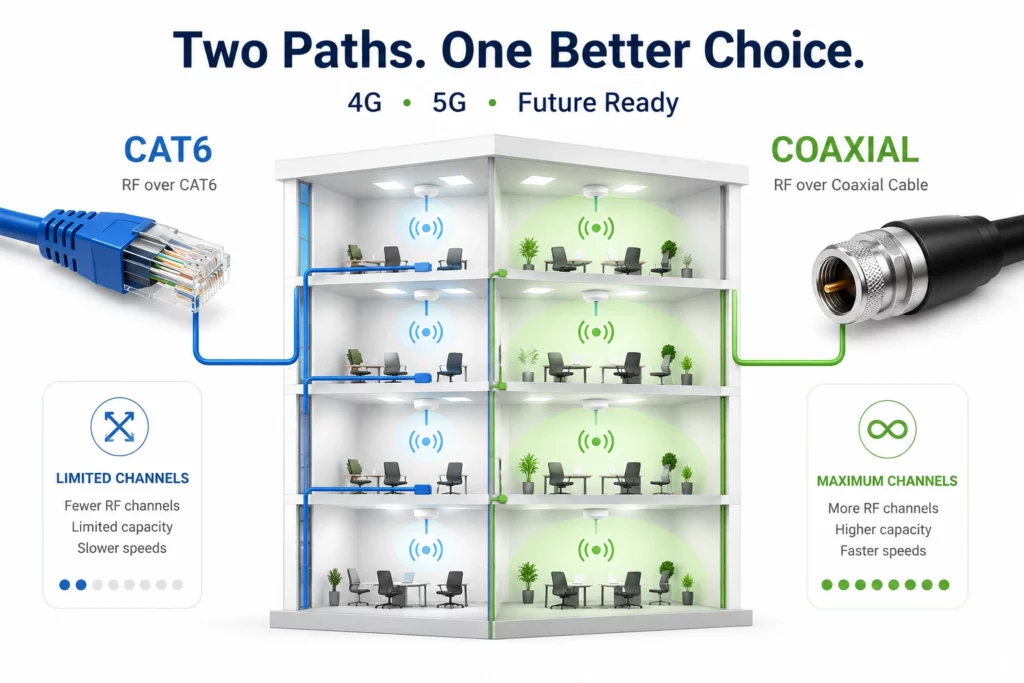
Although RF-over-CAT6 systems can carry RF signals, the medium introduces practical limitations that do not exist when RF is transported directly over coaxial cable.
The Hidden Limitation of CAT6
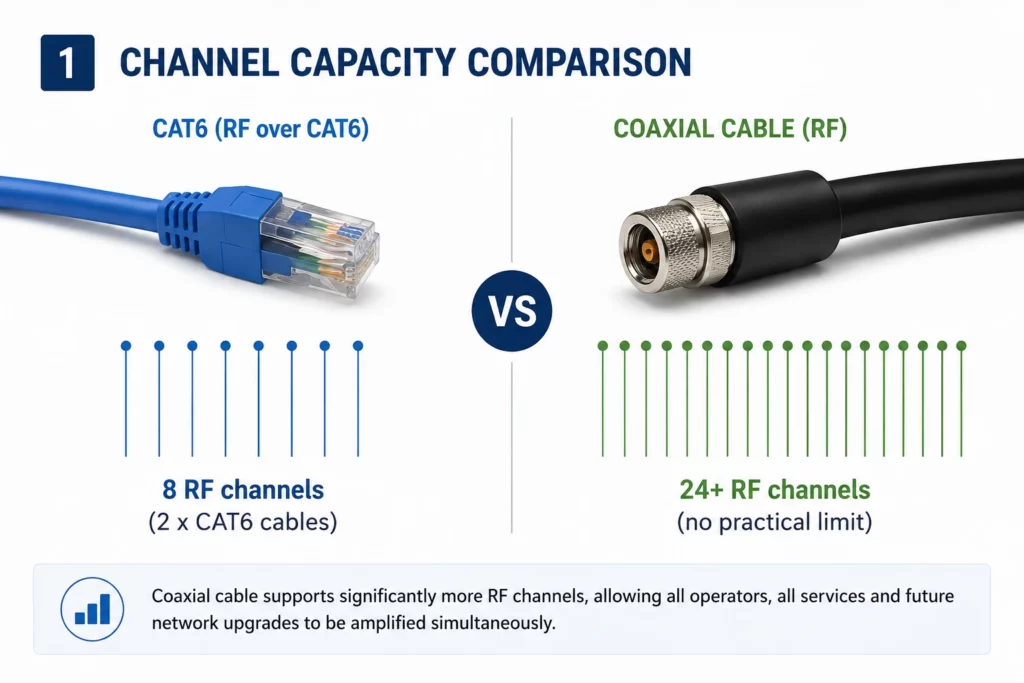
A standard CAT6 cable contains four twisted pairs. Even with two CAT6 cables, only eight RF channels are available.
In a building requiring coverage for four mobile operators, this typically means only two frequency bands per operator, forcing the installer to choose which services to amplify.
The Installer Is Forced to Guess
Modern operators use multiple LTE and 5G frequency bands simultaneously. The network—not the handset—decides which frequency a phone will use.
If that frequency is not amplified, coverage and performance suffer despite a correctly installed repeater.
Carrier Aggregation Changes Everything
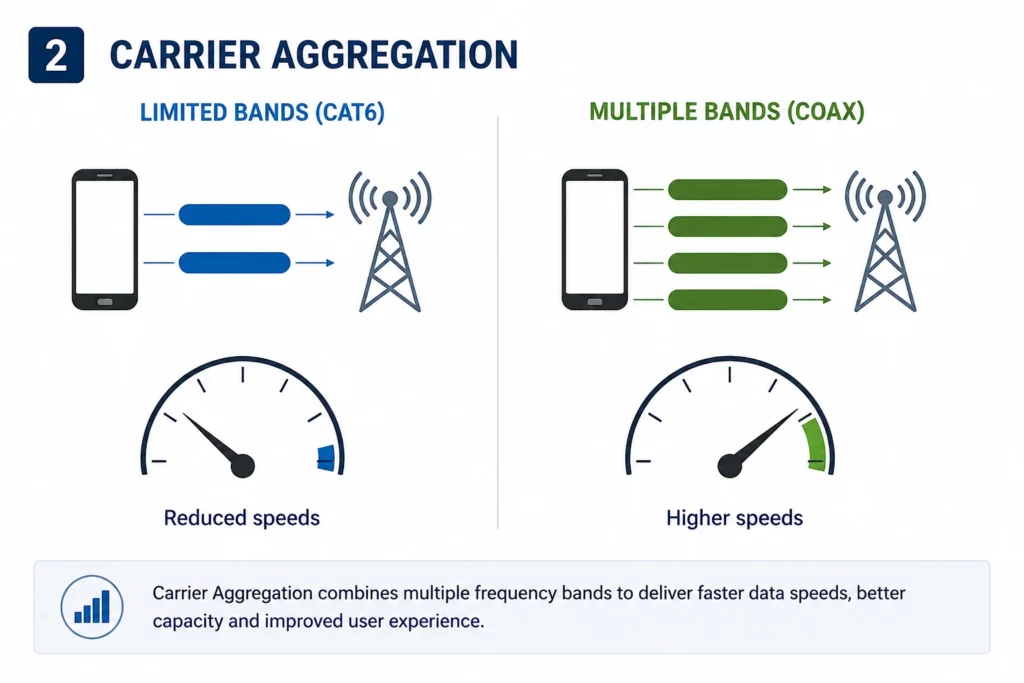
Carrier Aggregation combines multiple frequency bands to deliver higher LTE and 5G speeds.
When only two bands per operator are available, Carrier Aggregation cannot be used to its full potential, reducing throughput and user experience.
Today’s Perfect Installation Can Become Tomorrow’s Service Call
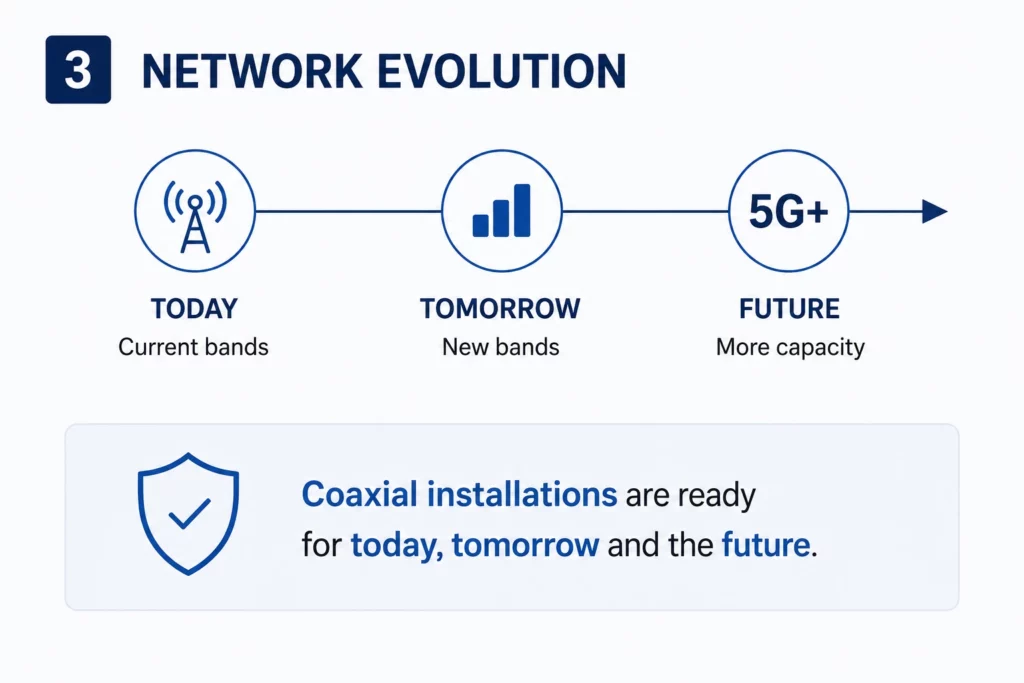
Operators continually repurpose spectrum, introduce new 5G services and optimise their networks.
An installation designed around only a handful of selected channels may work well today but require modification after future network upgrades.
The ‘Existing CAT6’ Argument
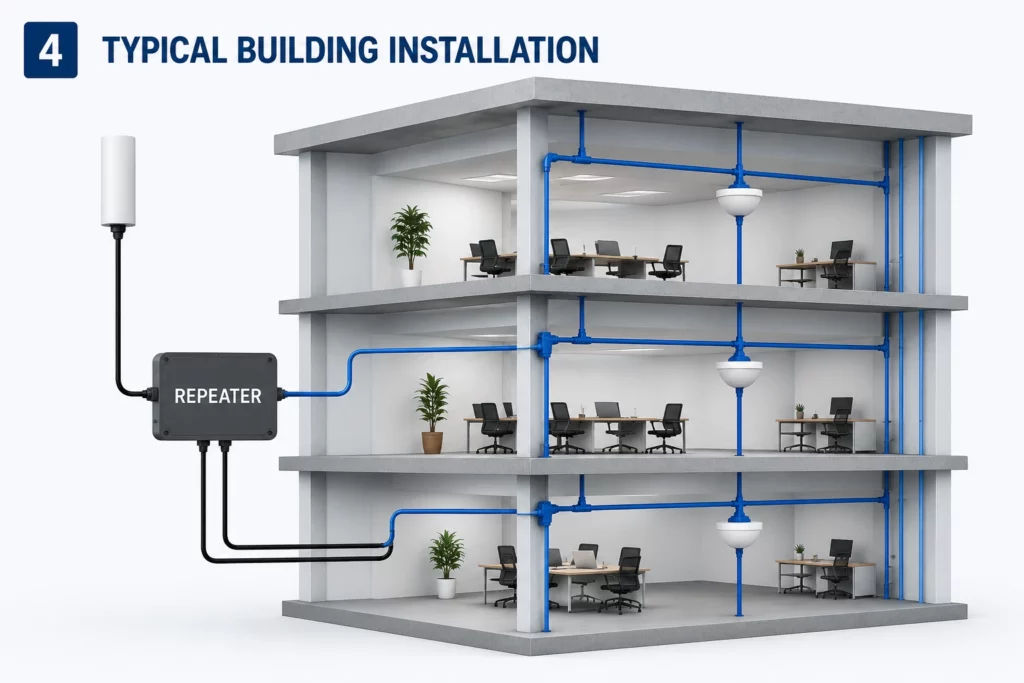
Existing structured cabling rarely provides the expected advantage.
CAT6 is often already carrying Ethernet traffic, routed to desks rather than antenna locations, or unavailable where RF distribution is required.
Why Coaxial Cable Remains the Engineering Standard
Coaxial cable was specifically developed for RF transmission and does not impose the same practical limitation on supported frequency bands.
A coaxial repeater system can amplify every required operator band, preserving performance today while accommodating future network upgrades.
Easier Installation Than Ever
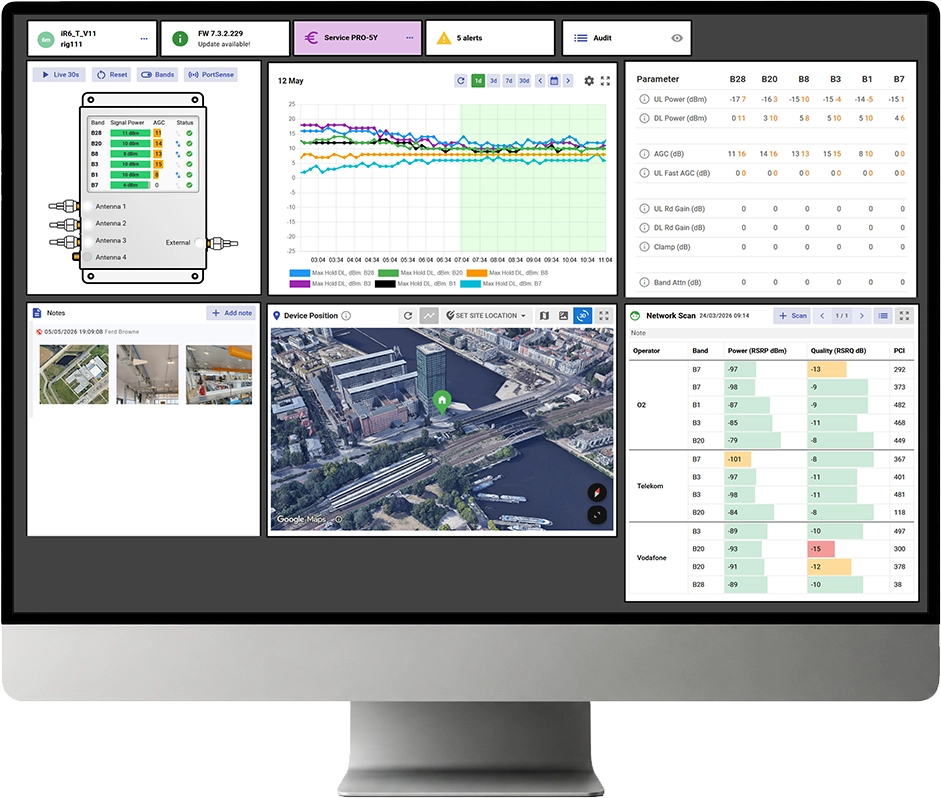
Modern repeater systems such as Stella Doradus include PortSense, continuously monitoring antenna connections and generating remote alerts if a cable becomes disconnected or develops a fault.
And What About Fibre?
Fibre is ideal for connecting Master Units to Remote Units over very long distances, such as airports, tunnels and campuses.
However, RF still travels over coaxial cable from each Remote Unit to the service antennas.
For most commercial buildings, coaxial remains the simpler and more cost-effective solution.
Choosing the Right Cable Is Choosing the Right System
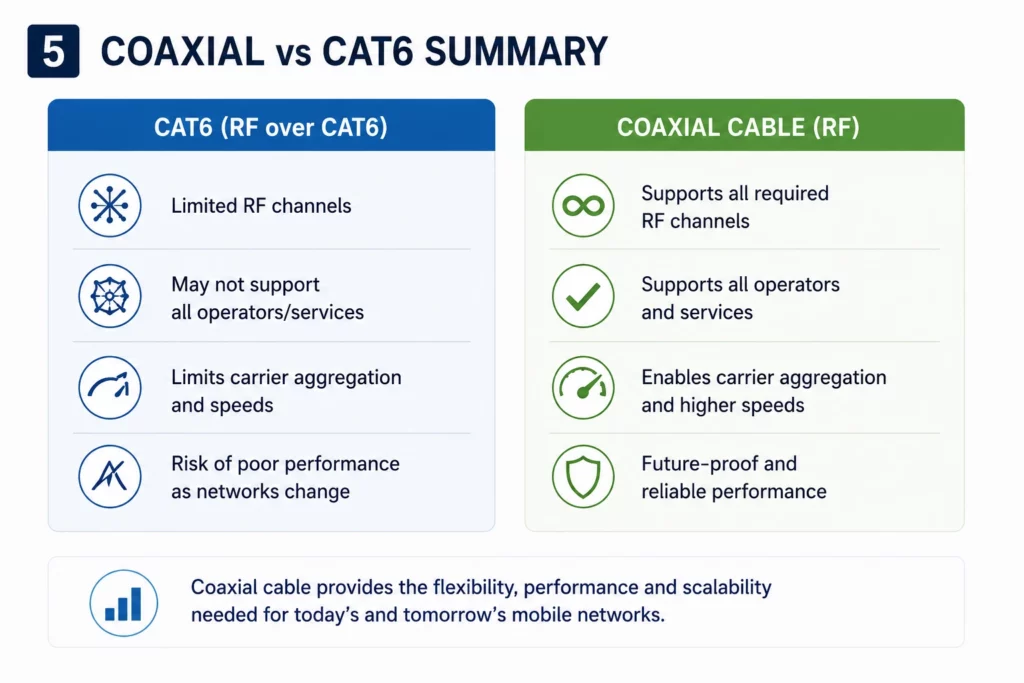
The cable infrastructure installed today determines how well the system performs for years to come. While CAT6 may appear attractive because it is familiar, its limited RF channel capacity can restrict operator support, reduce Carrier Aggregation performance and make installations less adaptable to future mobile network changes.
Coaxial cable was designed for RF transmission. It supports all required operator frequencies, preserves network performance and provides a straightforward path to future network upgrades. When your reputation depends on delivering reliable indoor mobile coverage for the lifetime of the installation, coaxial cable remains the engineering choice.